

India and EU Finalise Historic Trade Deal on January 27, 2026 — A Game-Changing Free Trade Agreement Transforming Global Commerce
India and the European Union have finalized a historic “Mother of All Trade Deals” in 2026, marking a major shift in global trade dynamics. This in-depth blog explains what happened today, key highlights of the India-EU Free Trade Agreement, tariff cuts, sector-wise impact on automobiles, IT, textiles, pharma, and services, and how the deal will benefit Indian markets, exporters, and investors. Discover why this landmark agreement is being called a game-changer for the Indian economy and what it means for stock markets, FDI inflows, and long-term growth.
Bulls In
1/27/20263 min read
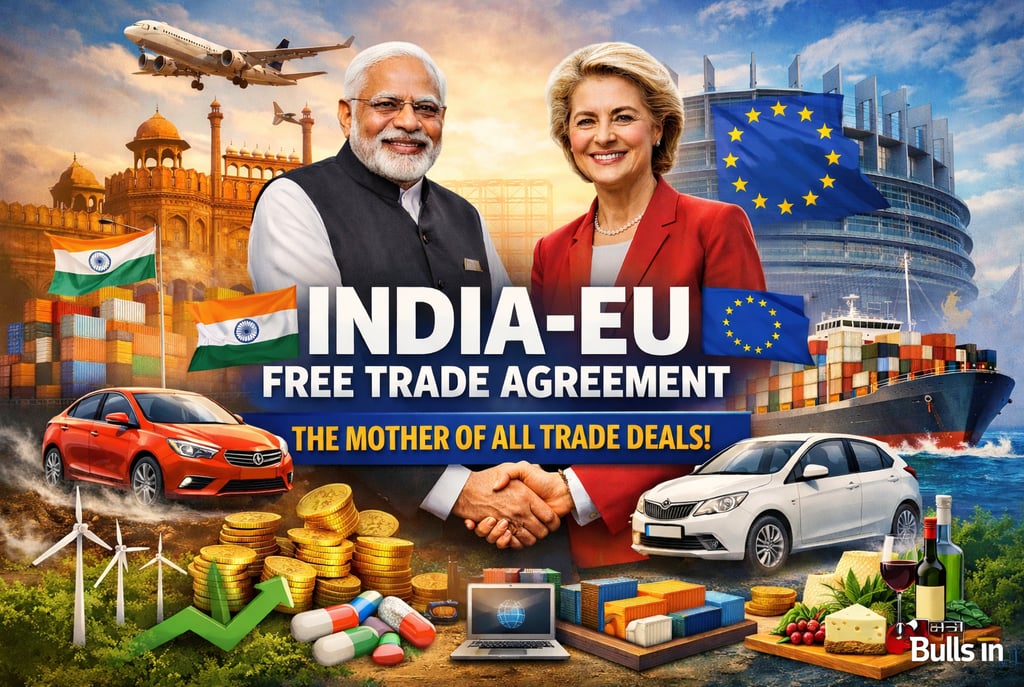
New Delhi, India — January 27, 2026: In one of the most significant global trade developments of this decade, India and the European Union (EU) have officially concluded negotiations on a historic Free Trade Agreement (FTA) — widely being described as the “mother of all trade deals.” The agreement was announced during the India–EU Summit in New Delhi, where Prime Minister Narendra Modi and European Commission President Ursula von der Leyen hailed the pact as a transformative moment in global economic cooperation.
Why This India-EU Trade Deal Matters
The new trade deal creates a free trade zone covering nearly two billion people and represents about 25% of global GDP, marking a major milestone in Indo-European economic relations.
fter nearly two decades of negotiations — initially starting in 2007 and picking up pace again in 2022 — both sides have agreed to significantly reduce or eliminate tariffs on the vast majority of goods traded between them.n
official statements, leaders from both sides emphasized that the agreement — expected to be formally signed after legal review later this year — will boost trade, investment, and cooperation across multiple sectors.
keyHighlights of the India-EU Trade Agreement
Massive Tariff Reductions
Tariffs on approximately 96.6% of EU goods exported to India will be eliminated or significantly reduced, making European products like machinery, chemicals, pharmaceuticals, and aerospace equipment cheaper and more competitive in Indian markets.
India will reciprocate by lowering duties on 99.5% of Indian goods entering the EU, offering exporters of textiles, gems, leather, marine products, and engineering goods broader access to European consumers.
utomobile Sector Gains
One of the most talked-about provisions is the gradual reduction of tariffs on European automobiles — from as high as 110% today down to 10%, with quotas allowing a set number of vehicles per year at preferential rates.
onsumer Goods & Food Products
Tariffs on European wine, beer, and spirits will be cut substantially — though not eliminated — making premium imports more affordable.
Processed foods, fruit juices, and olive oils will see duties reduced or removed, allowing greater variety and better prices for Indian consumers over time.
ervices and Investment
The FTA also liberalizes service sectors — including financial, maritime, telecom, and IT — enabling smoother market access, cross-border investment flows, and collaboration in cutting-edge industries.
nvironmental Cooperation
As part of broader strategic ties, the EU pledged €500 million to support India’s greenhouse gas reduction and climate resilience efforts, reflecting a blend of trade and sustainability goals.
hat the Leaders Are Saying
Prime Minister Narendra Modi described the agreement as a “historic milestone” that will create new opportunities for India’s 1.4 billion people and strengthen economic ties with Europe.
European Commission President Ursula von der Leyen called it the “mother of all deals,” highlighting its scale, ambition, and potential to reshape global trade patterns at a time of shifting economic alliances.
Both leaders also pointed to the broader geopolitical context — with the pact helping diversify global supply chains and reduce dependency on any single country or market amid rising tariff pressures from the U.S. and export controls from China.
what Happens Next?
Although the agreement has been finalised, it still needs to undergo legal vetting by both sides and be ratified by the European Parliament and member states. This process is expected to take 5–6 months, with the deal likely coming into effect within the next year once completedn
India, the government has already begun the legal review process, aiming for swift implementation to accelerate trade liberalization and attract further foreign investment.
Strategic Impact and Future Outlook
The India-EU trade agreement is a game-changer for global commerce — opening doors for Indian exporters, enticing European investors, and strengthening strategic ties between two of the world’s largest democracies. Analysts predict bilateral trade could double within the next decade, significantly boosting economic growth and job creation on both sides.
his landmark pact is aligned with India’s broader goal of expanding its global trade footprint, fortifying domestic industries, and integrating into global value chains — all while balancing national interests in sensitive sectors like agriculture and small-scale manufacturing.
In summary: Today’s announcement marks a new chapter in India-EU relations — a comprehensive trade deal with widespread benefits for businesses, consumers, and the global economy. Stay tuned as this historic agreement moves toward formal signing and implementation over the coming months.
Contact
Reach out for insights or support
Phone
hello@bullsin.com
+1-555-789-1234
© 2025. All rights reserved.
www.bullsin47@gmail.com