
India–European Union Trade Deal: “Mother of All Deals” – What to Expect and Why Markets Are Watching Closely
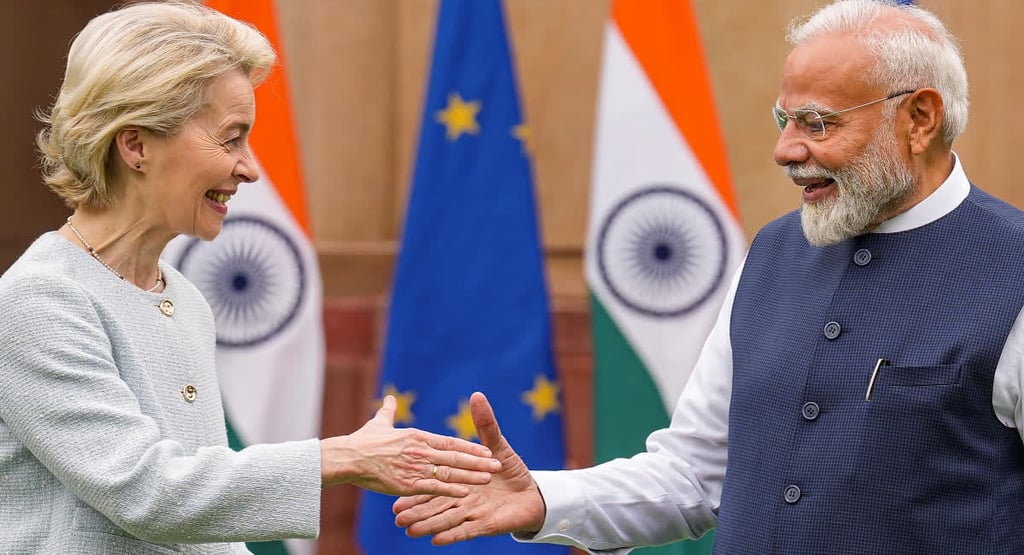
Why is the India-EU trade deal being called the Mother of All Deals? Learn what history suggests, which sectors may benefit, and how this mega trade agreement could influence Indian stock markets and global investors.
Bulls in
1/26/20263 min read
India–European Union Trade Deal: “Mother of All Deals” – What to Expect and Why Markets Are Watching Closely
The India–European Union (EU) trade deal is being widely described as the “Mother of All Trade Deals”, and for good reason. If finalized, this agreement could reshape India’s export story, foreign investment flows, and long-term economic positioning—especially at a time when global supply chains are shifting away from overdependence on China.
For investors, businesses, and capital market participants, this deal is not just about diplomacy—it’s about money flows, sectoral winners, and long-term growth visibility.
Let’s break down what this deal means, what we can realistically expect based on previous trade agreements, and how Indian markets could react.
Why the India–EU Trade Deal Is So Important
The European Union is India’s third-largest trading partner, while India is among the EU’s fastest-growing major economies. Bilateral trade already exceeds €120 billion annually, yet tariffs, regulatory barriers, and unresolved issues have kept the relationship from reaching its full potential.
This proposed agreement—officially known as the India-EU Free Trade Agreement (FTA)—has been under discussion for years. What’s different now is urgency:
Europe wants reliable, democratic supply chains
India wants export growth, technology access, and capital inflows
Both want strategic independence in a fragmented global economy
That’s why markets are calling it the mother of all deals.
Lessons from Previous Trade Deals: What History Tells Us
To understand what to expect, we need to look at India’s past trade agreements.
India–UAE CEPA
Boosted exports in gems, jewellery, textiles, and engineering goods
Improved FDI sentiment immediately after signing
Markets reacted positively in export-oriented stocks
India–Japan and India–ASEAN FTAs
Gradual benefits, not instant miracles
Biggest gains came from manufacturing and auto ancillaries
Domestic companies with global exposure benefited more than purely local players
Key takeaway:
Trade deals don’t create overnight rallies—but they change long-term growth trajectories, which smart investors track early.
What’s Expected in the India–EU Deal
Based on negotiation signals and past frameworks, here’s what’s likely:
1. Lower Tariffs on Indian Exports
Sectors expected to benefit:
Pharmaceuticals
Textiles & apparel
Auto components
Chemicals
Engineering goods
This could significantly improve India’s export competitiveness in high-value European markets.
2. Easier Market Access for Services
India is pushing hard for:
IT & digital services
Skilled professional mobility
Recognition of qualifications
This is crucial for India’s services-led growth model.
3. Stronger Investment Protection
EU investors want:
Policy stability
Faster dispute resolution
Clear ESG frameworks
If agreed, this could unlock long-term FDI into Indian manufacturing, renewables, and infrastructure.
4. Sustainability & ESG Compliance
Unlike older trade deals, the EU places heavy emphasis on:
Carbon standards
Green supply chains
Labor norms
While this increases compliance costs in the short term, it pushes Indian companies toward global best practices, which markets reward over time.
Impact on Indian Stock Markets
From a capital market perspective, the deal is structurally positive.
Likely market beneficiaries:
Export-oriented large caps
Pharma & specialty chemical companies
IT services with EU exposure
Manufacturing firms under “Make in India”
Short-term market behavior:
Event-based volatility
“Buy the rumour, sell the news” reactions possible
Long-term outlook:
Improved earnings visibility
Higher FII confidence
Better valuation multiples for globally aligned companies
This is not a speculative story—it’s a compounding story.
What Should Investors Do Now?
Smart investors don’t wait for headlines—they position early.
Track companies with EU revenue exposure
Focus on balance-sheet-strong exporters
Avoid chasing short-term hype; think 3–5 years
Watch policy clarity, not just signing dates
For SIP investors, this deal strengthens the case for India’s structural growth narrative, especially in globally competitive sectors.
Final Thoughts
The India–EU trade deal isn’t just another agreement—it’s a strategic economic reset. Like all major trade pacts, its real impact will unfold over years, not weeks. But history shows that countries integrating deeper with large, developed markets tend to attract more capital, grow exports, and stabilize currencies.
For India, this deal could be the bridge between domestic growth and global leadership.
And for investors watching quietly?
This may well be one of those moments that looks obvious in hindsight.
Stay tuned to Bullsin.com for smart, humanized market insights that help you stay one step ahead
Contact
Reach out for insights or support
Phone
hello@bullsin.com
+1-555-789-1234
© 2025. All rights reserved.
www.bullsin47@gmail.com