

Middle-East Tension 2026: Iran vs Israel & USA — What It Means
Geopolitical tension in the Middle-East Tension 2026 shakes global markets. Discover how Iran-Israel-USA conflict affects oil, Nifty, gold and investors worldwide.
INDIAN MARKET CONDITION
Bulls In
3/4/20263 min read
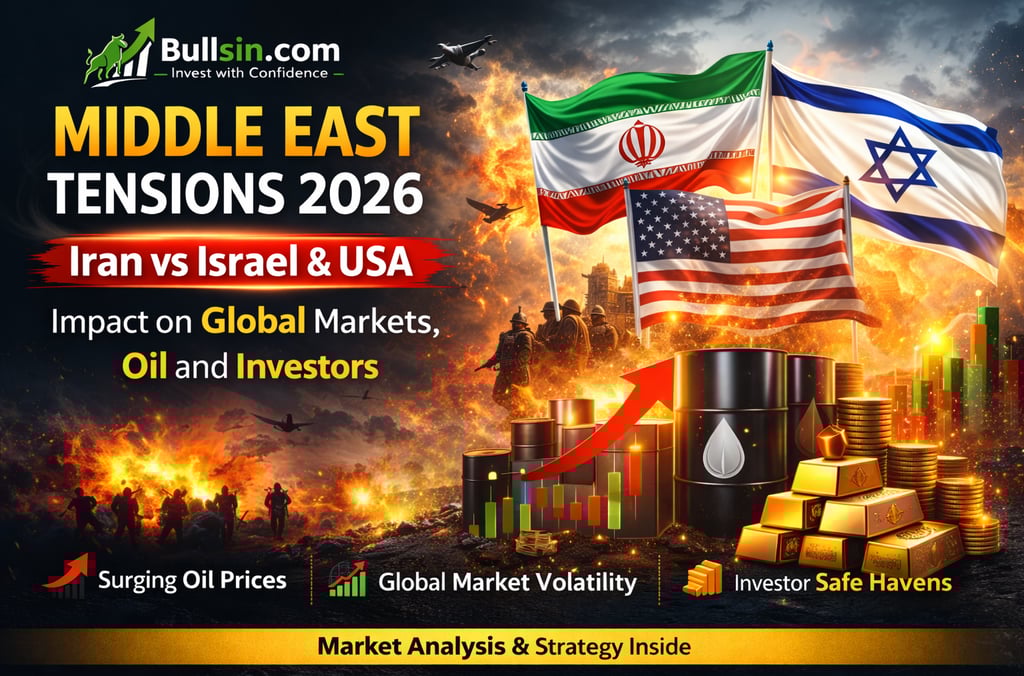

Introduction: Middle East at the Brink — Why the World Is Watching
The Middle East has once again become the epicenter of geopolitical turmoil as tensions escalate sharply between Iran, Israel, and the United States in early 2026. What began as a long-running proxy conflict has now expanded into full-scale military engagements, raising alarms across global markets, energy supply chains, and economic forecasts.
This blog explores the root causes of the escalation, recent developments, and what this means for investors, global markets, and economies like India’s — where ripple effects are already being felt.
🔥 Current Situation: Escalation of Conflict
In February 2026, coordinated strikes by the United States and Israel targeted multiple strategic sites in Iran, including military and nuclear infrastructure. This operation significantly intensified hostilities, prompting swift Iranian retaliation through ballistic missile and drone launches against U.S. and allied positions across the region.
The strikes have triggered a severe escalation in conflict zones across the Middle East:
Iranian drones struck the U.S. Embassy in Saudi Arabia, intensifying regional security concerns.
Hezbollah, an Iranian-aligned group, launched retaliatory attacks against Israel from Lebanon.
The strategic Strait of Hormuz — a gateway for nearly 20% of the world’s oil supply — has seen significant disruptions in shipping operations.
These developments have amplified fears of a broader conflict that could draw in other regional players and even global powers.
⚠️ Humanitarian and Regional Impact
The intensifying hostilities have already resulted in significant human cost and displacement. Civilian casualties have been reported in multiple countries, including Iran, Israel, and Lebanon, with infrastructure destruction contributing to growing humanitarian concerns.
Nationwide travel advisories and evacuations have been issued by governments around the world, and many commercial flights have been canceled due to airspace closures and safety risks.
📈 Impact on Global Energy and Commodity Markets
One of the most immediate global repercussions of the conflict is in the energy markets, particularly oil:
Brent crude prices surged by double-digit percentages as the risk premium escalated due to potential supply disruptions from the Strait of Hormuz.
Gasoline and diesel prices have risen in markets worldwide, squeezing budgets and complicating inflation dynamics.
The crisis underscores how geopolitical instability in the Middle East swiftly transmits into energy market volatility, affecting inflation, consumer prices, and corporate cost structures across economies.
📉 Financial Markets and Investor Sentiment
Global equities have reacted nervously to the crisis. Stock markets in Asia, Europe, and the United States have experienced heightened volatility, with major indices seeing sharp intraday swings.
In India, benchmarks like the Sensex and Nifty have been under pressure, sliding in response to rising oil prices and global risk-off sentiment as investors recalibrate expectations.
Meanwhile, traditional “safe haven” assets such as gold and the U.S. dollar have strengthened, reflecting investor flight to perceived security amid uncertainty.
🌍 What Investors Need to Know
So what does this mean for investors? Here are the key takeaways:
1. Expect Short-Term Volatility
Geopolitical shocks like this typically trigger market volatility. Prices may swing sharply based on news flow, risk sentiment, and oil price trajectories.
2. Energy Sector Could See Opportunity
Global energy stocks and commodities may outperform amid rising oil and gas prices, though this comes with higher risk.
3. Diversification is Crucial
Safe havens like gold, treasury bonds, and defensive sectors could provide cushioning during market turbulence.
4. Not All Risk is Bad Risk
History shows that markets eventually absorb geopolitical events once risk timelines shorten or diplomatic solutions emerge.
🧭 Longer-Term Perspective: What Comes Next?
Analysts believe that the duration and wider escalation of the conflict will determine whether this becomes a short-lived risk premium or a prolonged geopolitical crisis. The Strait of Hormuz remains a focal point — any sustained disruption there would have prolonged global economic effects.
However, global powers are also engaged in diplomatic avenues to avoid broader fallout. Multilateral pressure and mediation efforts are ongoing, which could help stabilize the situation over time.
📝 Conclusion: A Geopolitical Test for Global Markets
The 2026 Middle East tensions involving Iran, Israel, and the USA are already shaping global markets, energy prices, and investor behavior. While short-term uncertainty is likely to persist, long-term outcomes depend heavily on diplomatic progress and conflict de-escalation.
For investors, this moment reinforces the importance of risk management, diversified positioning, and staying informed as global dynamics evolve.
Contact
Reach out for insights or support
Phone
hello@bullsin.com
+1-555-789-1234
© 2025. All rights reserved.
www.bullsin47@gmail.com